Stori Préstamos
From a WhatsApp chat to the product with the most potential at Stori.

The challenge
Stori was a credit card company. We wanted to know if its users needed personal loans, and we had to find out with a team of four and no engineers.
0 → 1 · It started with a chat
We offered the first loans over WhatsApp and handled every approval by hand. Four proofs of concept later, the interest was clear, and the team started to grow.
Designing for people we weren’t
Our users were Mexican; most of the team wasn’t.
So we made talking to them a habit: every Friday we decided what we wanted to learn, and spent the next week finding out. It became the most user-centric product at the company.
Launching on WhatsApp
The first real version lived in a chat: an offer, the terms, and the money in their account.
The whole loan happened inside WhatsApp: choosing the amount and the number of payments, reviewing the offer, verifying identity, and signing the contract.
1 → scale · Into the app
WhatsApp got us to market, but it wasn’t the place to manage a loan, and many people mistook offers for scams.
We moved into the app in two steps: first, managing the loan; then, applying for it.
Step 1 · Loan management
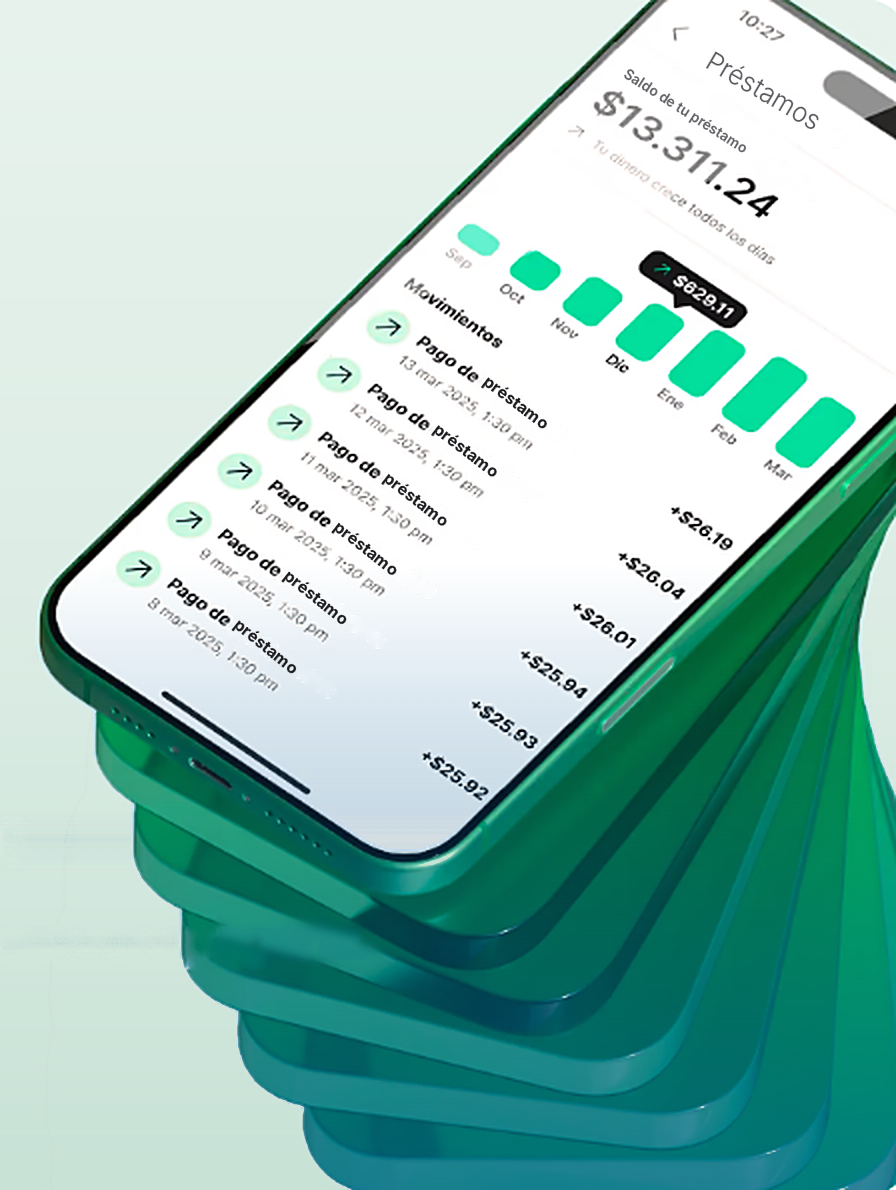
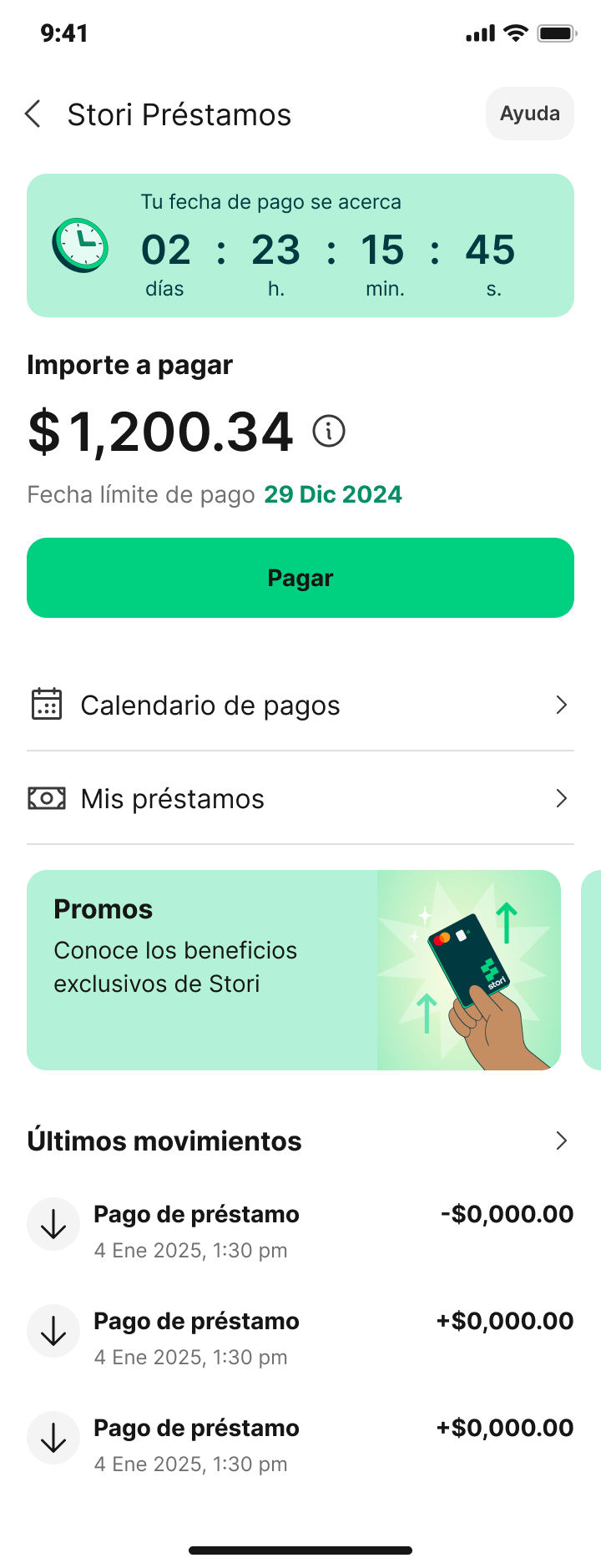
People came to the app looking for how to pay their loan. Now they find it right away.
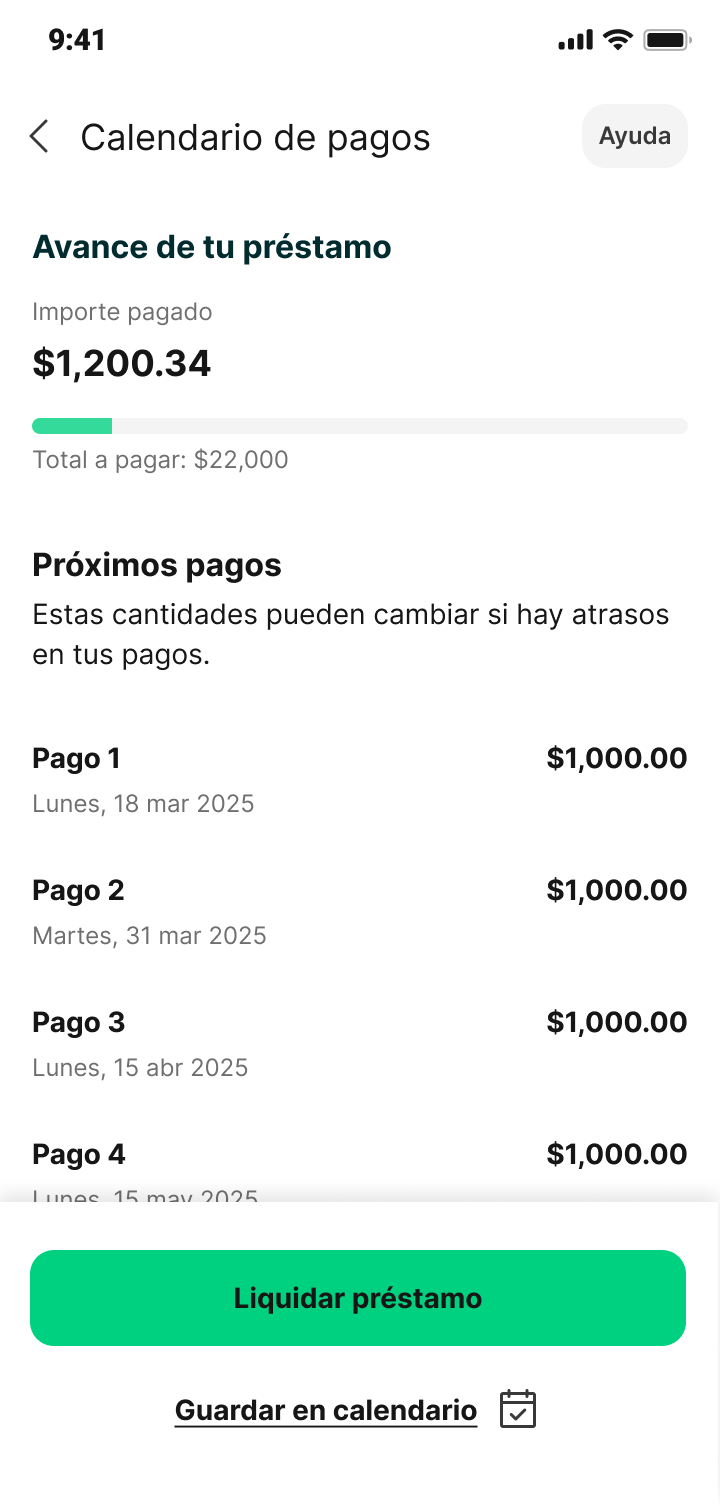
A loan dashboard with one clear action: pay. Payment dates, amounts and history, always in sight.
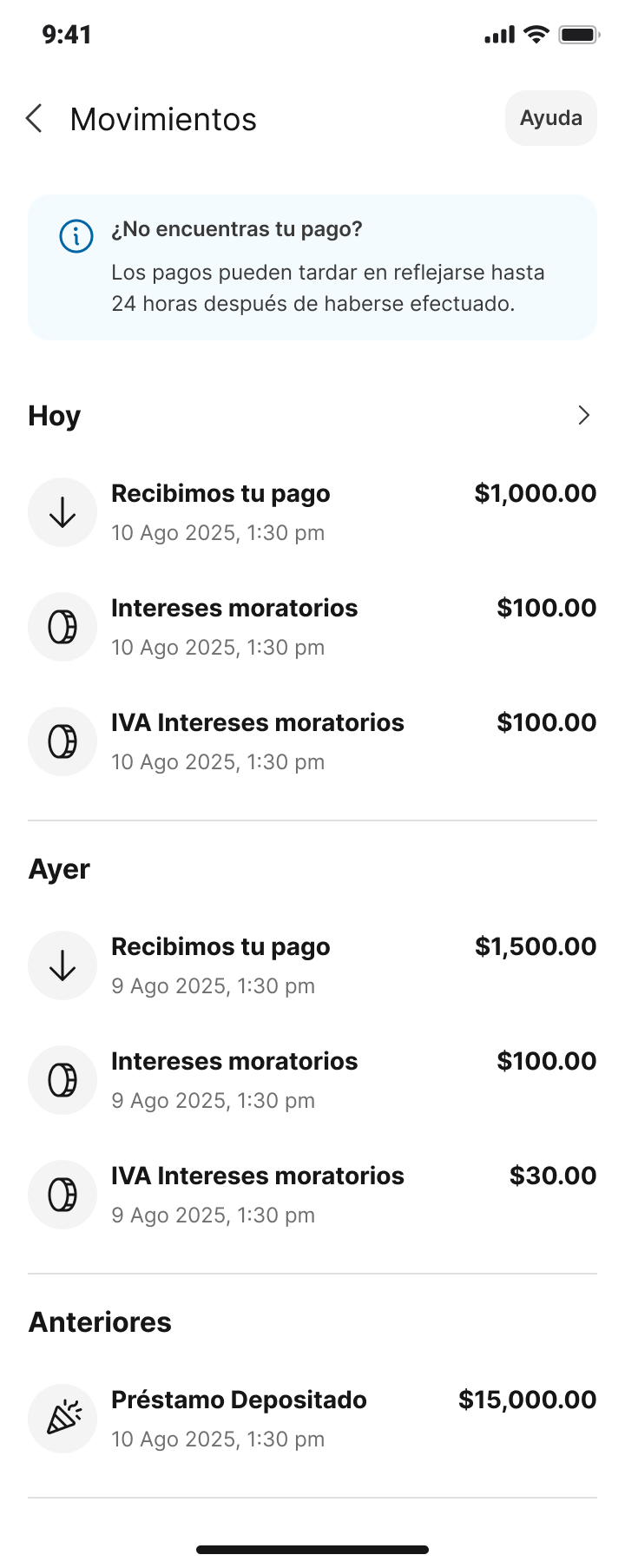
Paying in a few taps
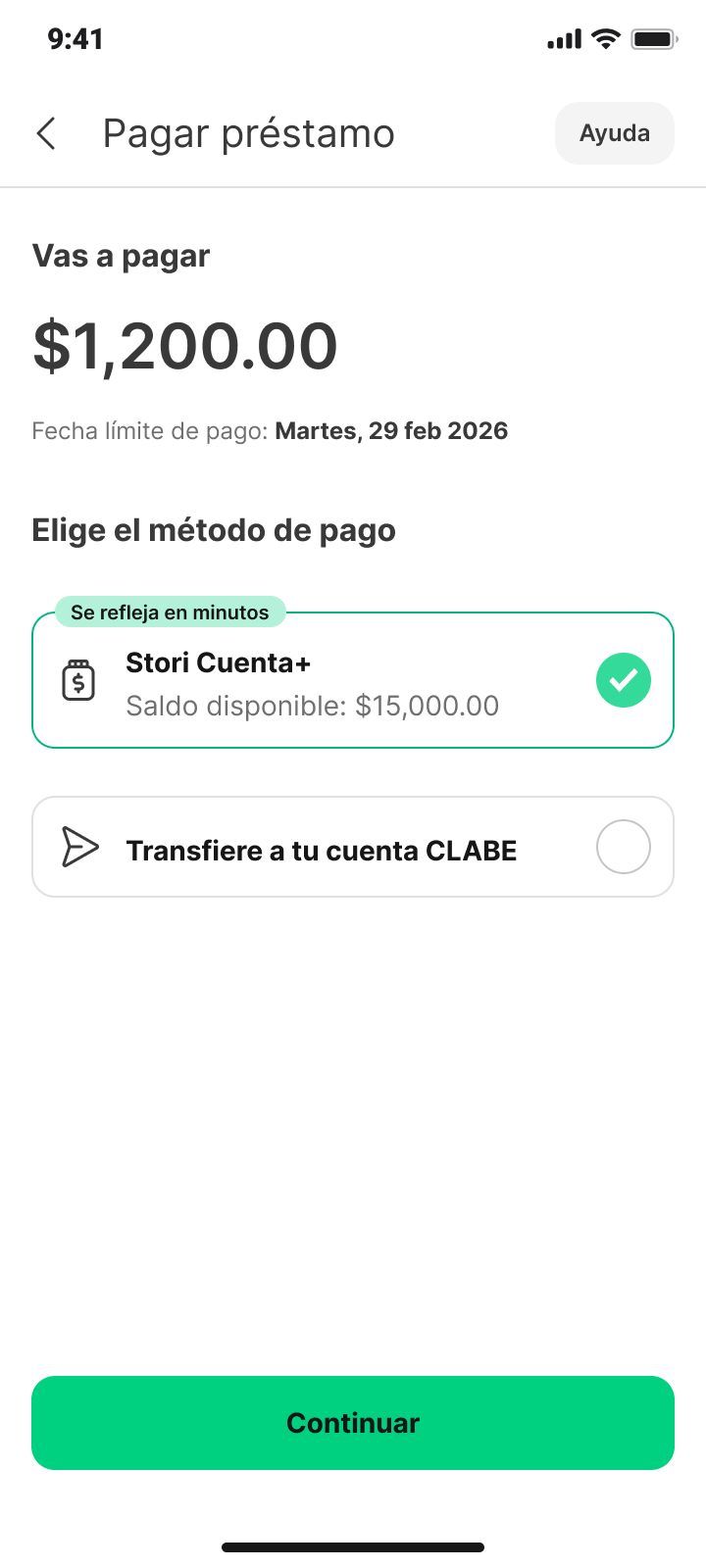
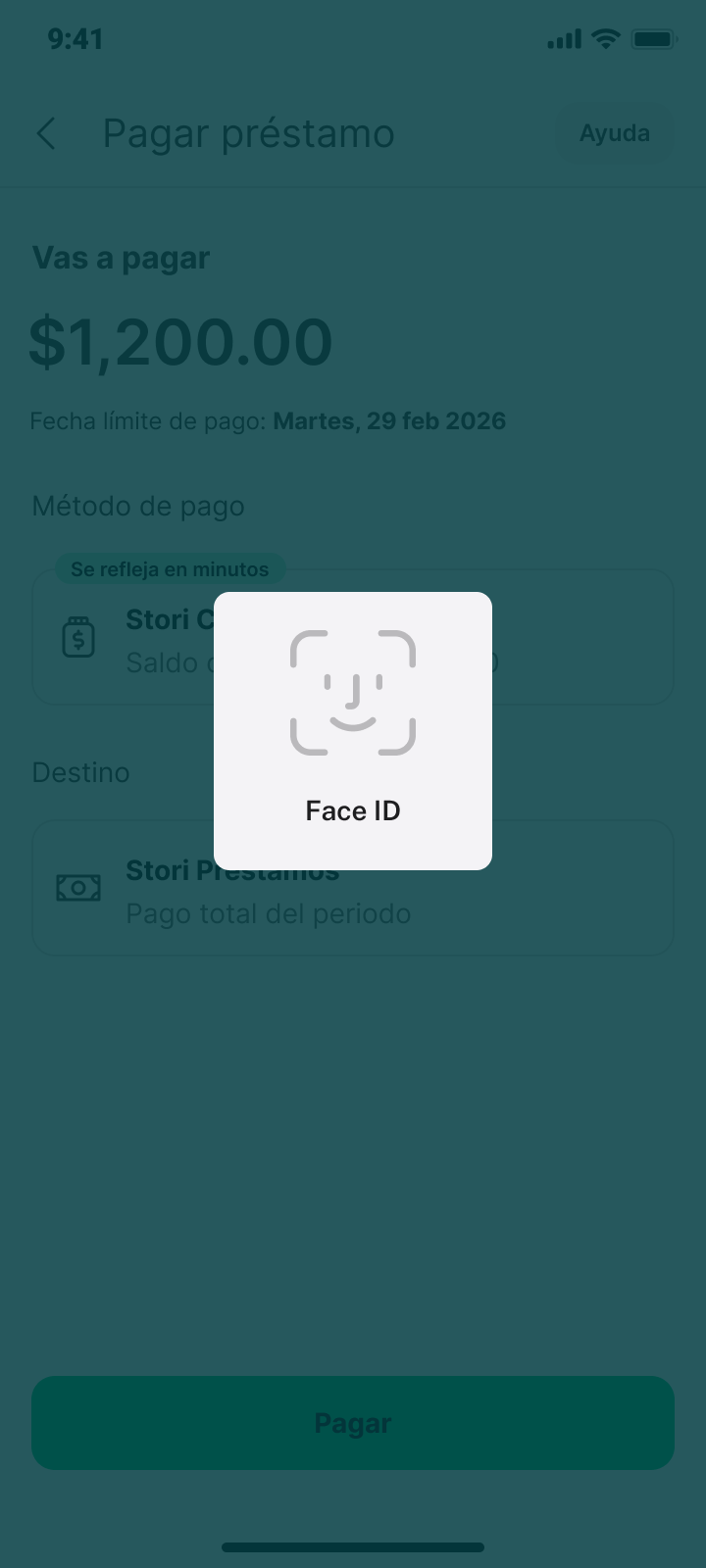
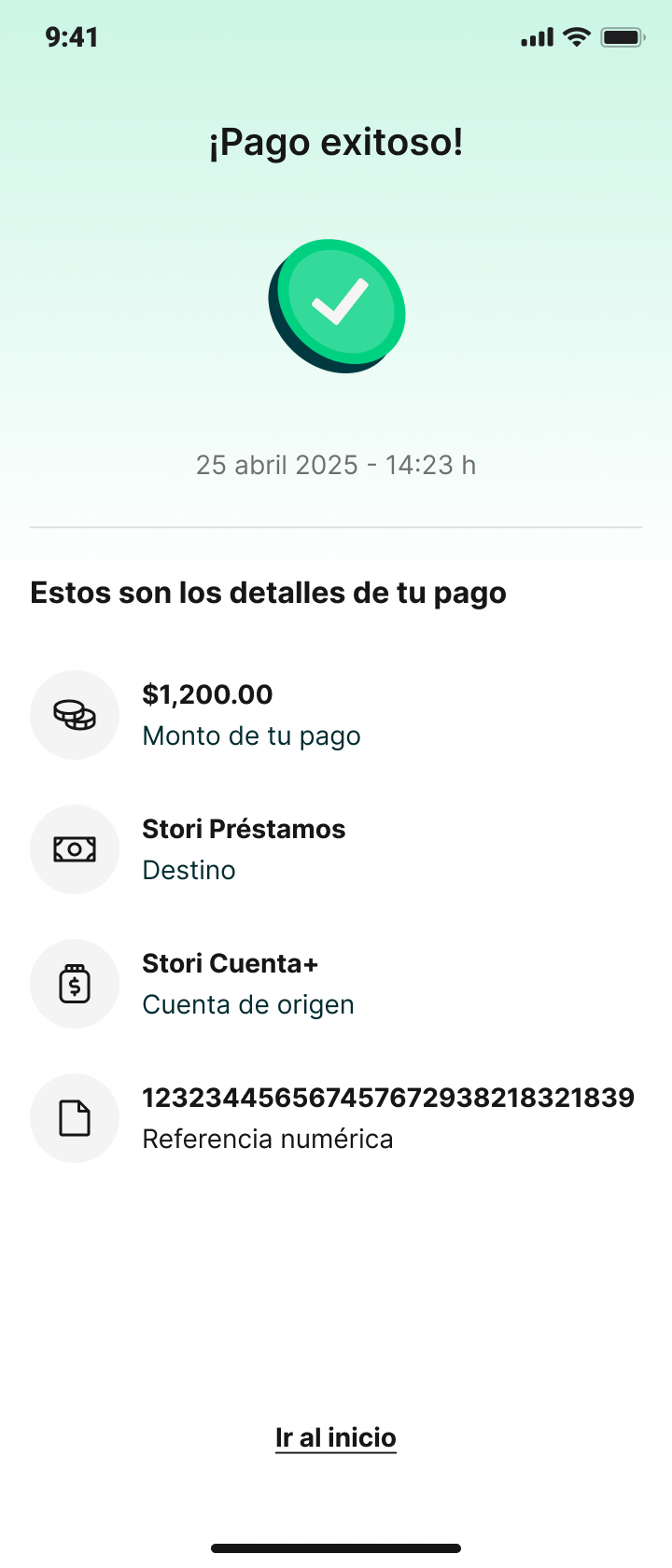
Paying on time had to be the easiest part.
Pay from the Stori account or by transfer, confirm with Face ID, and get every detail of the payment right away.
Step 2 · Loan application
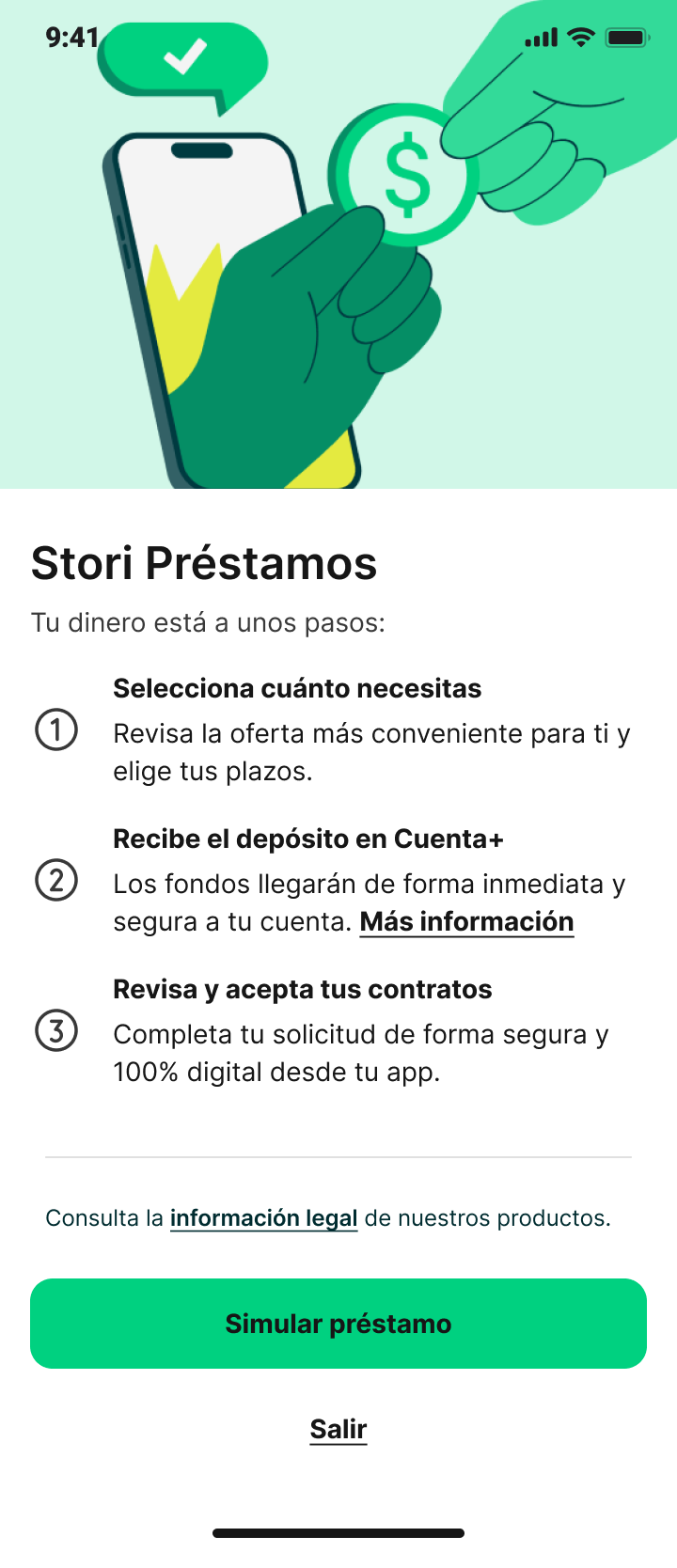
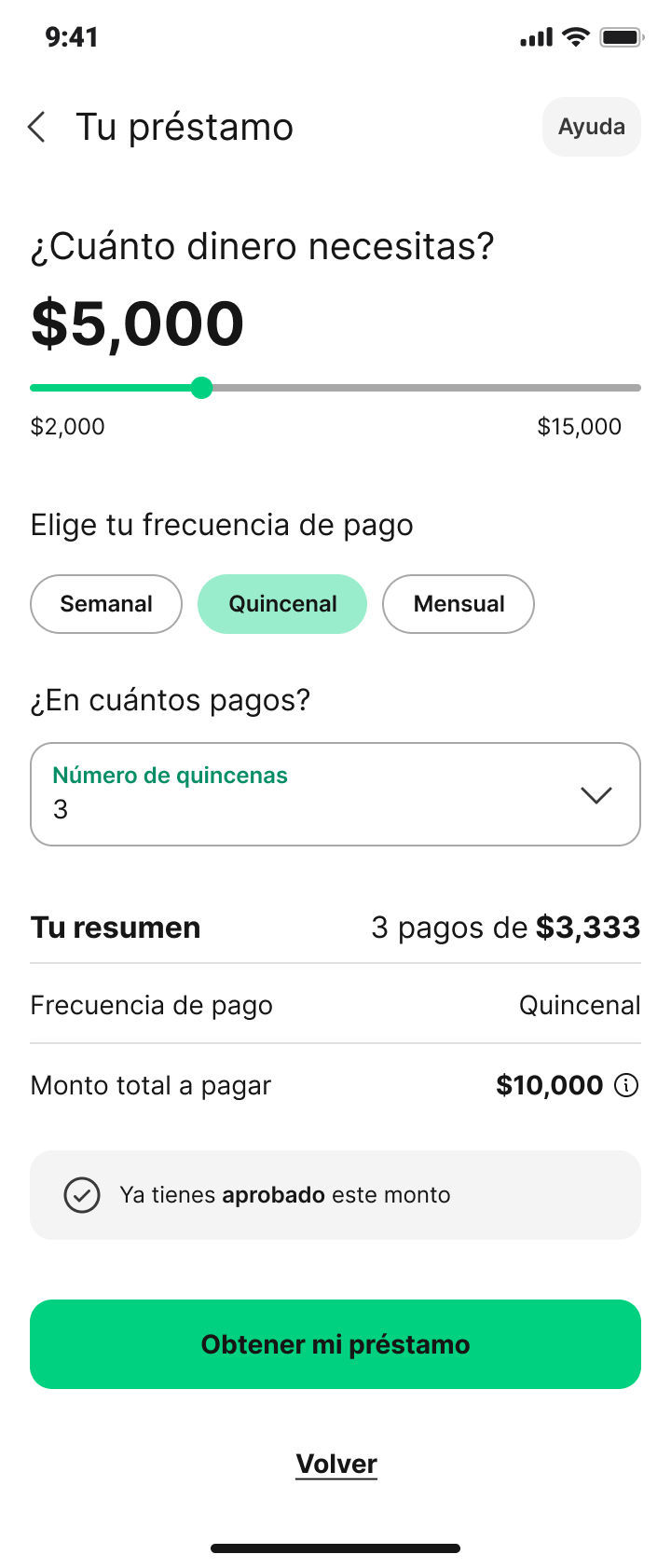
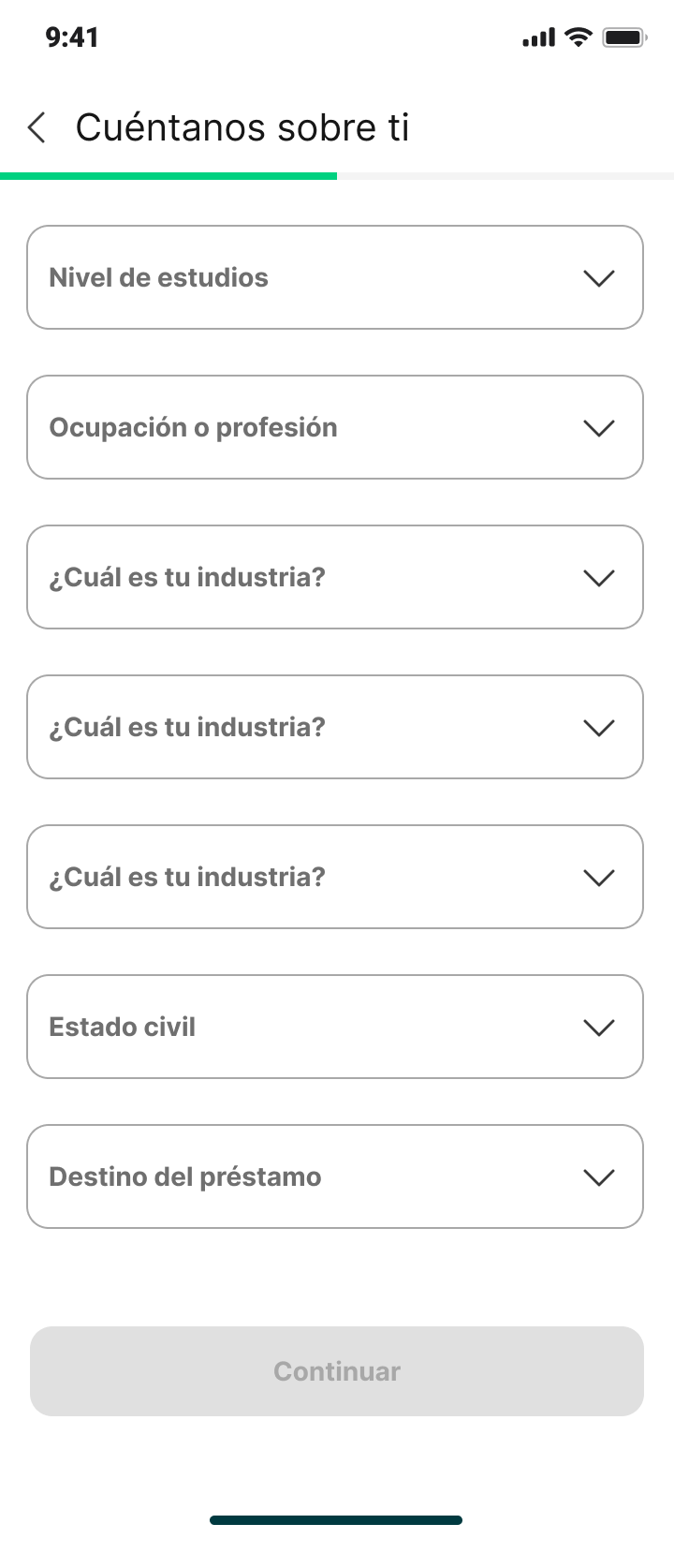
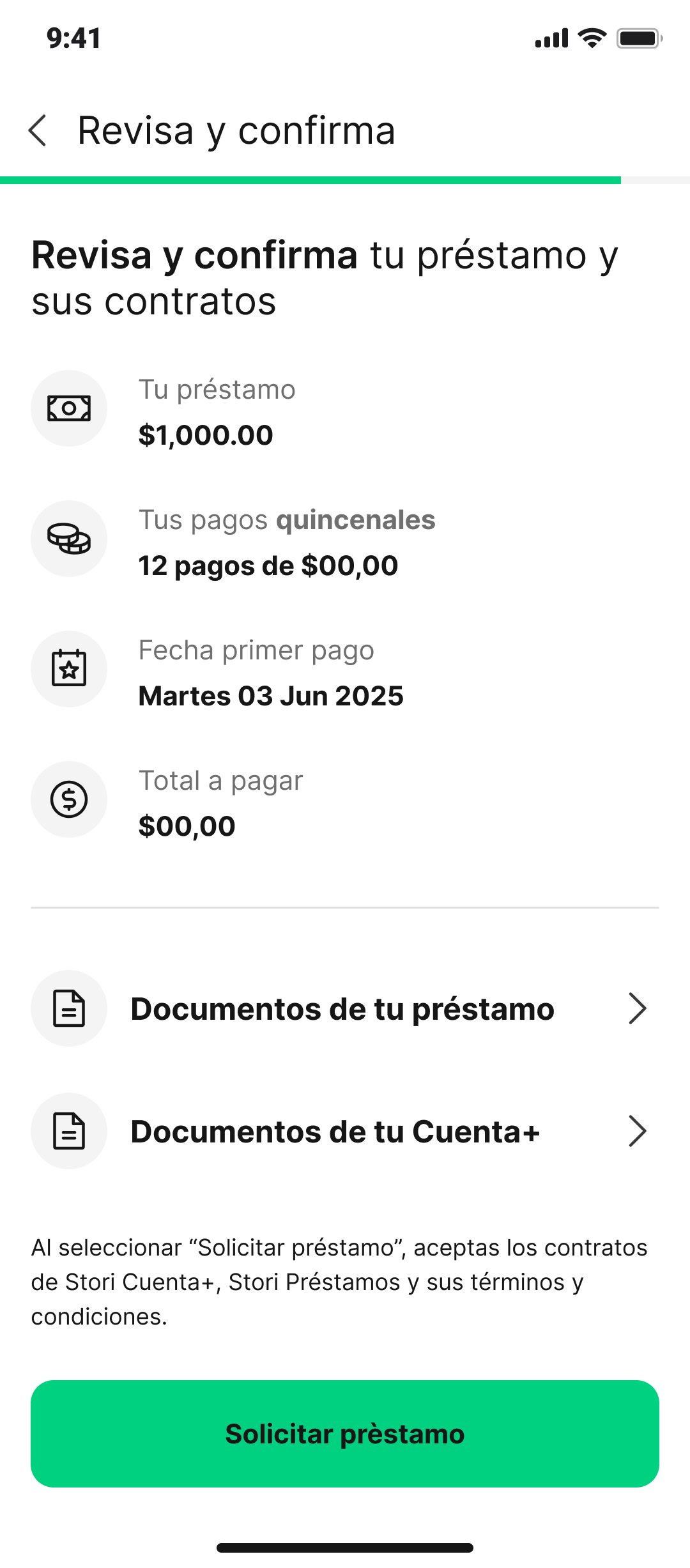
With loan management live, the application moved into the app too.
Simulate the loan, understand the cost and apply, all inside the Stori app.
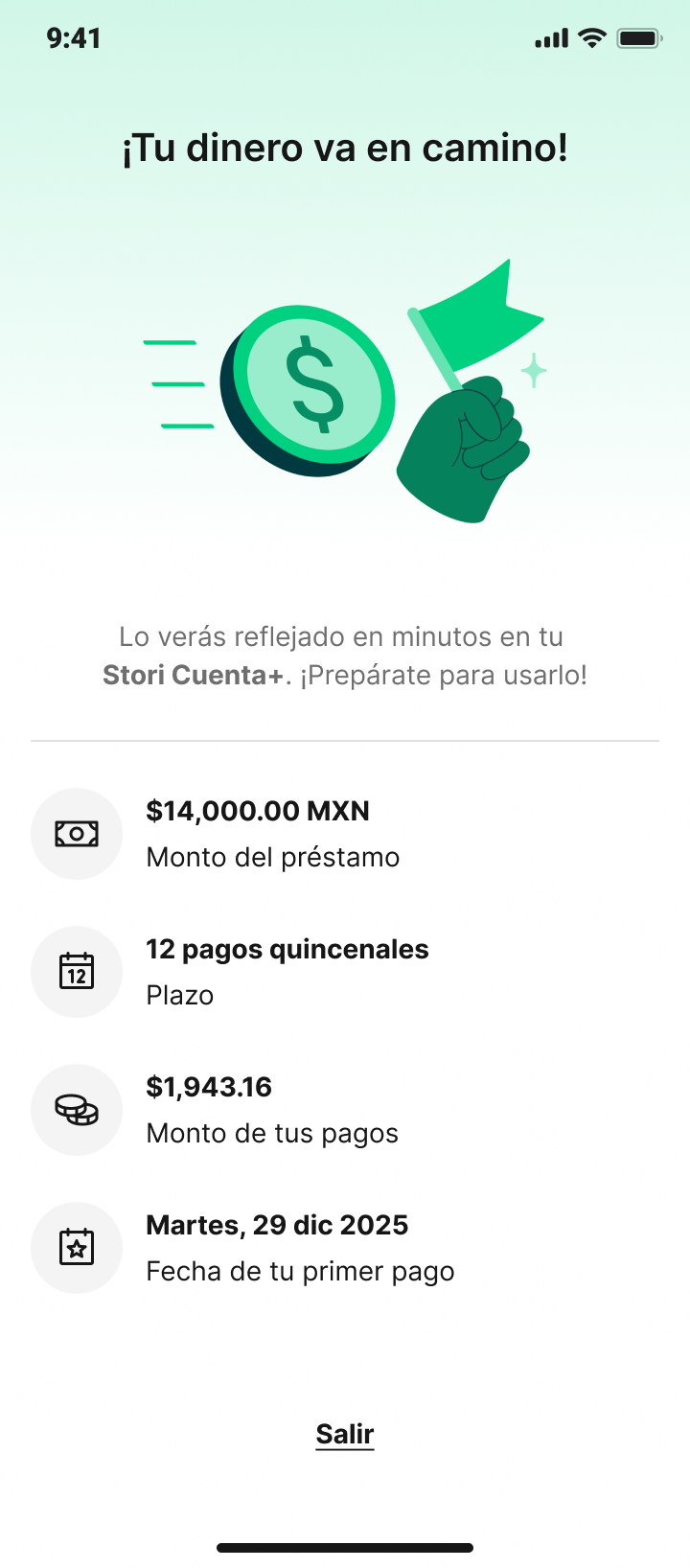
Where it is today
Next · Revolving credit lines
One credit limit, multiple loans, one payment date.
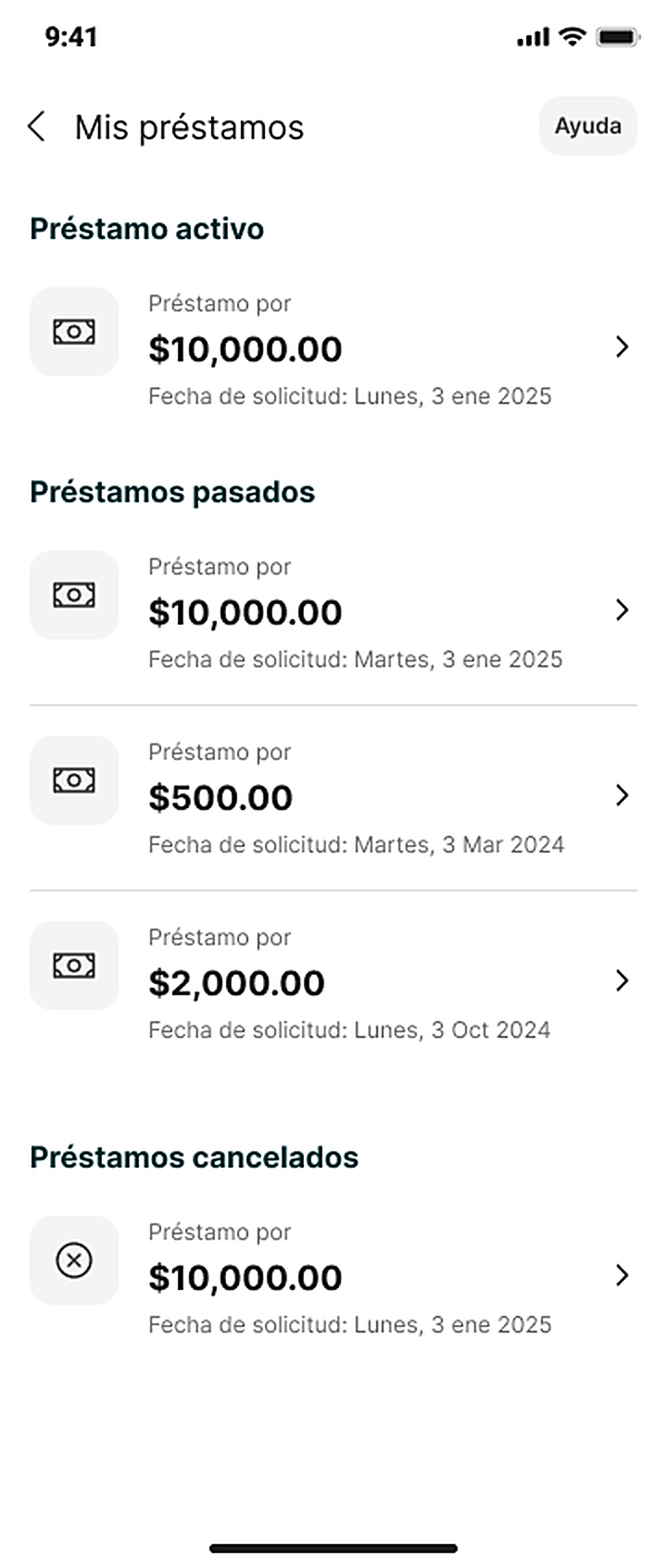
Loan management is what changes the most: one limit to borrow from at any time, one payment date for every active loan, and each loan traceable on its own.
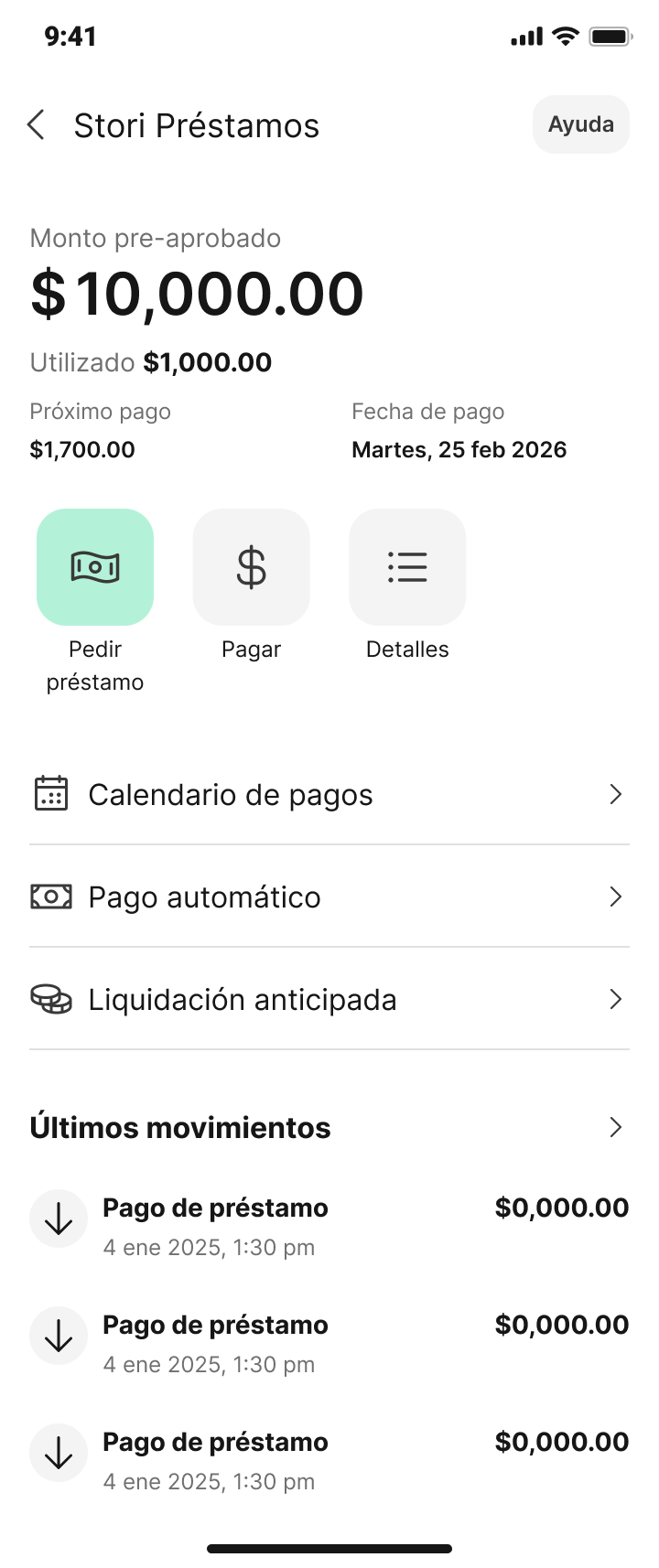
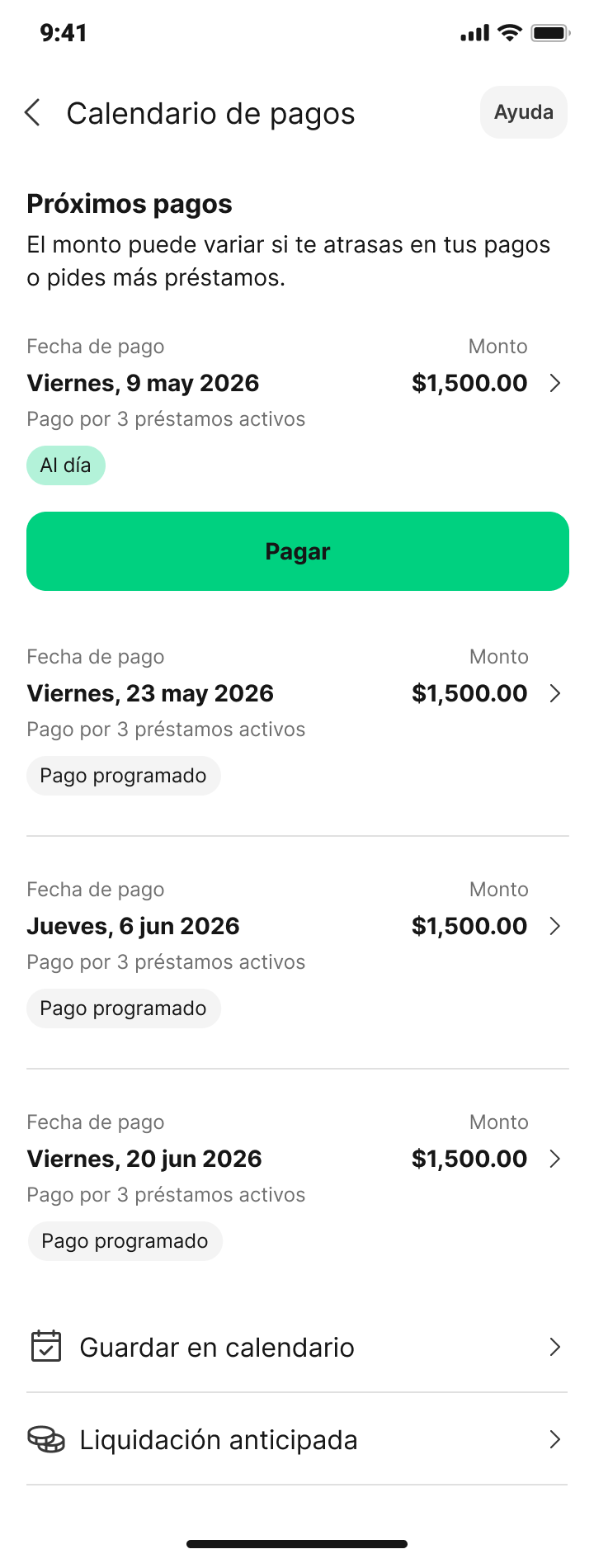
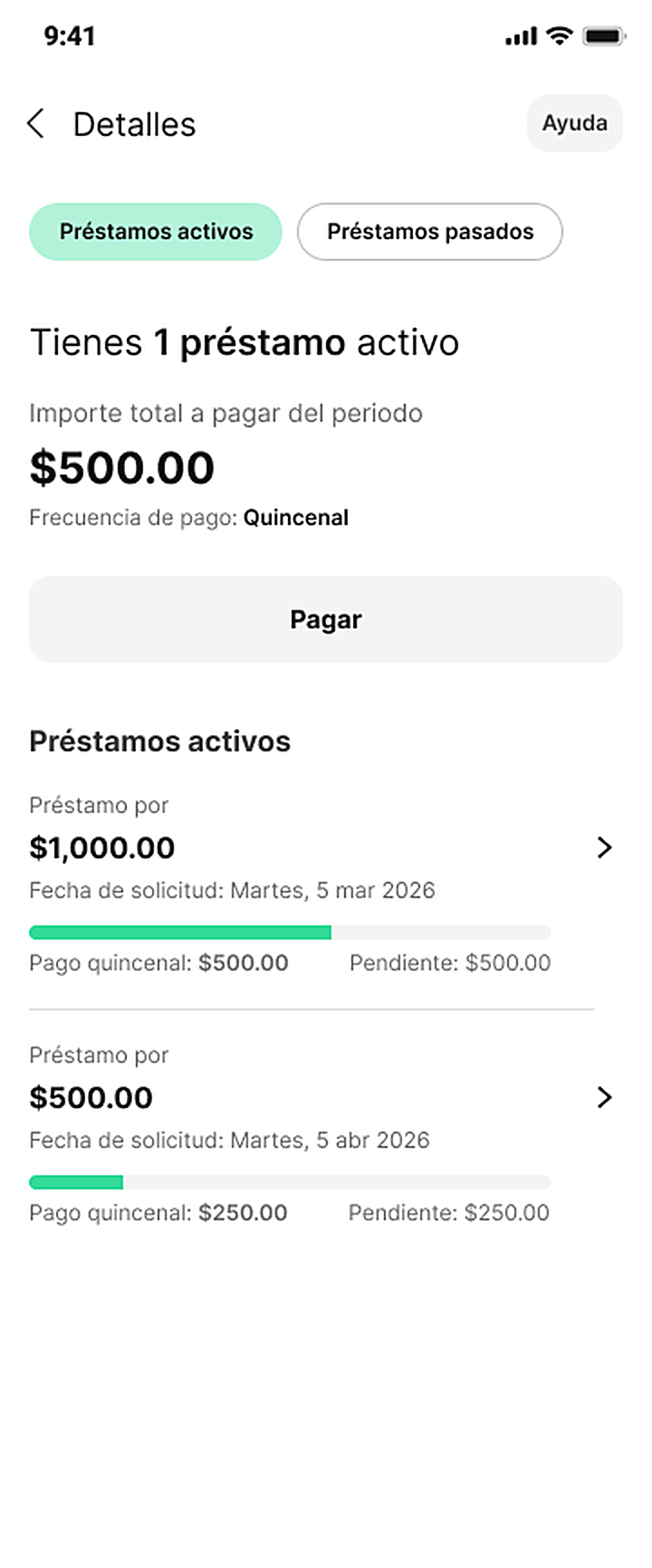
Why it matters. Paying in installments is one of the most common ways to buy in Latin America, and many of our users already split purchases this way somewhere else.
What’s next. The revolving line is the foundation: the same credit limit, used to pay for a purchase in a few installments, right when people need it. The next step is learning where and how our users would want to use it.